Preventing Musculoskeletal Disorders in the Workplace in Geneva
Musculoskeletal disorders (MSDs) are the leading cause of occupational illness in Switzerland. They develop slowly — often invisible until the first sick leave. This is not an inevitable cost of doing business: it is a signal that working conditions have exceeded your team's capacity to adapt.

The key: MSD prevention is not an administrative burden — it is a collective project that turns health into performance. By analysing real work conditions and mobilising your teams, you reduce absenteeism and act durably on physical and organisational constraints.
Contents
MSDs: a Health and Performance Lever
According to SUVA, musculoskeletal disorders are the leading cause of occupational disability in Switzerland, affecting primarily the back and upper limbs. Effective prevention relies on workstation ergonomics and detecting physical signals before pain becomes chronic.
SUVA records more than 250,000 accidents related to physical effort at work each year. Non-accidental musculoskeletal conditions (tendinitis, chronic low back pain) are the primary cause of long-term absenteeism in Swiss companies.
Recognising symptoms and areas of vulnerability
The body often signals saturation through tingling or joint stiffness. A sudden loss of strength during routine tasks may also appear. These are not isolated incidents — they indicate a mechanical constraint exceeding the tissue's recovery capacity.
Repetitive movements overload tendons over hours. Nerves in the upper limbs undergo painful mechanical compression. Without change, these inflammations eventually permanently restrict your employees' mobility.
The goal is not to wait for injury. It is to intervene when the signals are still weak — and reversible.
Spotting warning signs in your teams
Unusual fatigue complaints, spontaneous posture changes, declining task precision — these changes often mask physical discomfort that employees try to hide. Excessive fatigue at the end of the day is a serious alert that should not be ignored.
Identifying Sources of Tension
Assessing physical constraints by sector

| Risk factor | Constraint type | Concrete example |
|---|---|---|
| Environment | Physical | Cold, vibrations, noise |
| Biomechanical | Movement | Repetitive gesture, load handling |
| Organisational | Time-related | Imposed pace, tight deadlines |
| Psychosocial | Mental | Chronic stress, lack of autonomy |
Measuring the weight of organisation and stress
Time pressure increases muscle tension. Lack of autonomy prevents natural effort regulation. Stress acts as a documented catalyst of physical pain — the psychosocial dimension is inseparable from physical prevention.
Swiss Legal Framework and Key Experts
Your obligations under LTr and the CO
In Switzerland, employers have a duty to protect workers' health under Art. 6 LTr (Labour Act) and Art. 328 CO (Code of Obligations). This means:
- Conducting a risk analysis under OPA (Accident Prevention Ordinance)
- Adapting workstations to eliminate or reduce identified constraints
- Training exposed workers
- Documenting the measures taken
Art. 6 LTr requires employers to take all necessary measures to protect workers' physical and psychological health. SUVA oversees OPA compliance in companies under its authority. Note: there is no DUERP in Switzerland — the French equivalent does not apply here.
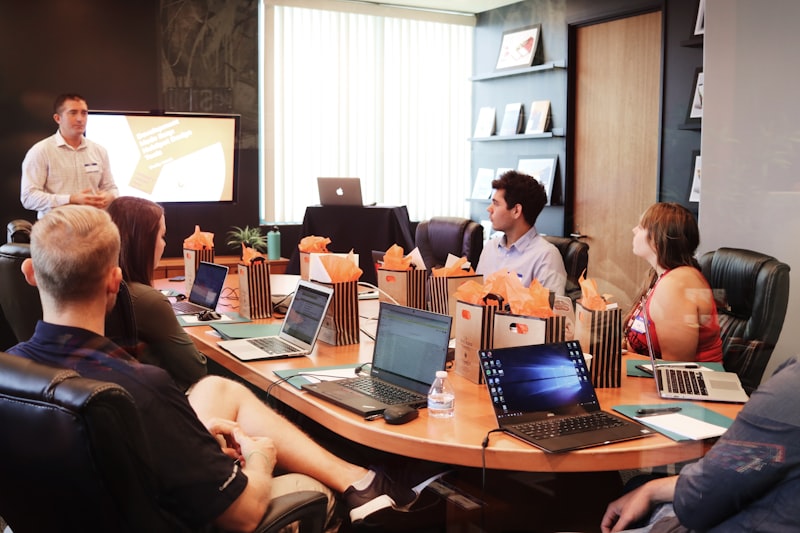
SUVA, occupational physician and staff delegation
SUVA offers risk analysis tools, ergonomic checklists and training. It can also commission workplace inspections.
The occupational physician advises on workstation adjustments and refers to specialists. Involve them to validate your ergonomic changes.
The staff delegation (commission du personnel) knows the real difficulties encountered on the ground. Their involvement makes new working methods easier to accept.
The synergy between health professionals and staff representatives turns a legal obligation into a genuine company social project.
A Four-Step Prevention Strategy

Acting on the Ground with Simple Tools
Micro-breaks and task rotation
Short breaks promote muscle recovery and release accumulated tension. Task rotation varies the muscle groups used and breaks the pattern of harmful repetitive movements. Remember: teaching employees to "lift correctly" is pointless if the workstation forces them to twist their back by design — workstation redesign comes before individual behaviour training.
Low-cost space adjustments
Work surface height, screen position (eyes level with the top third), footrests, document holders, glare-free lighting. These simple settings immediately reduce tension in the shoulders and neck.
Co-building solutions with your employees
Your teams' field experience is your best resource. Use a participatory approach:
- Mixed working groups (operators + managers)
- Real-condition equipment testing
- Anonymous feedback collection
- Final validation by users
Want to act on your Geneva site?
Ergonomic audit, group workshop, posture and movement training — available in English and French, in Geneva and on the Vaud Riviera.
Request a conversationFAQ — MSD Prevention
How do I recognise early signs of MSDs in my employees?
Watch for compensation gestures: an employee who regularly rubs their neck, postures that gradually stiffen at the screen, or declining precision in tasks. These signals indicate tissues are already saturating under constraint. Unusually high fatigue at the end of the day is also a serious alert not to ignore.
What are my legal obligations in Switzerland?
Art. 6 LTr and Art. 328 CO require employers to actively protect workers' physical and psychological health. This means conducting a risk analysis under OPA, adapting workstations and collaborating with SUVA and the occupational physician. Unlike France, Switzerland has no DUERP — but the result obligation is equivalent.
What quick solutions can I implement tomorrow?
Introduce regular micro-breaks, organise task rotation and adjust existing workstations: work surface height, screen positioning, lighting. These simple adjustments immediately reduce tension. For a deeper intervention, an ergonomic workstation audit by a specialised physiotherapist identifies risk sources precisely.
Should I train employees in posture or redesign workstations?
Both are complementary, but workstation ergonomics takes priority. Training an employee to "lift correctly" is ineffective if the workstation structurally forces them to twist their back. Real-work analysis reveals what belongs to workstation design — and what belongs to individual behaviour to correct through training.
