Ankle Sprain Rehabilitation in Geneva: PEACE & LOAD Protocol
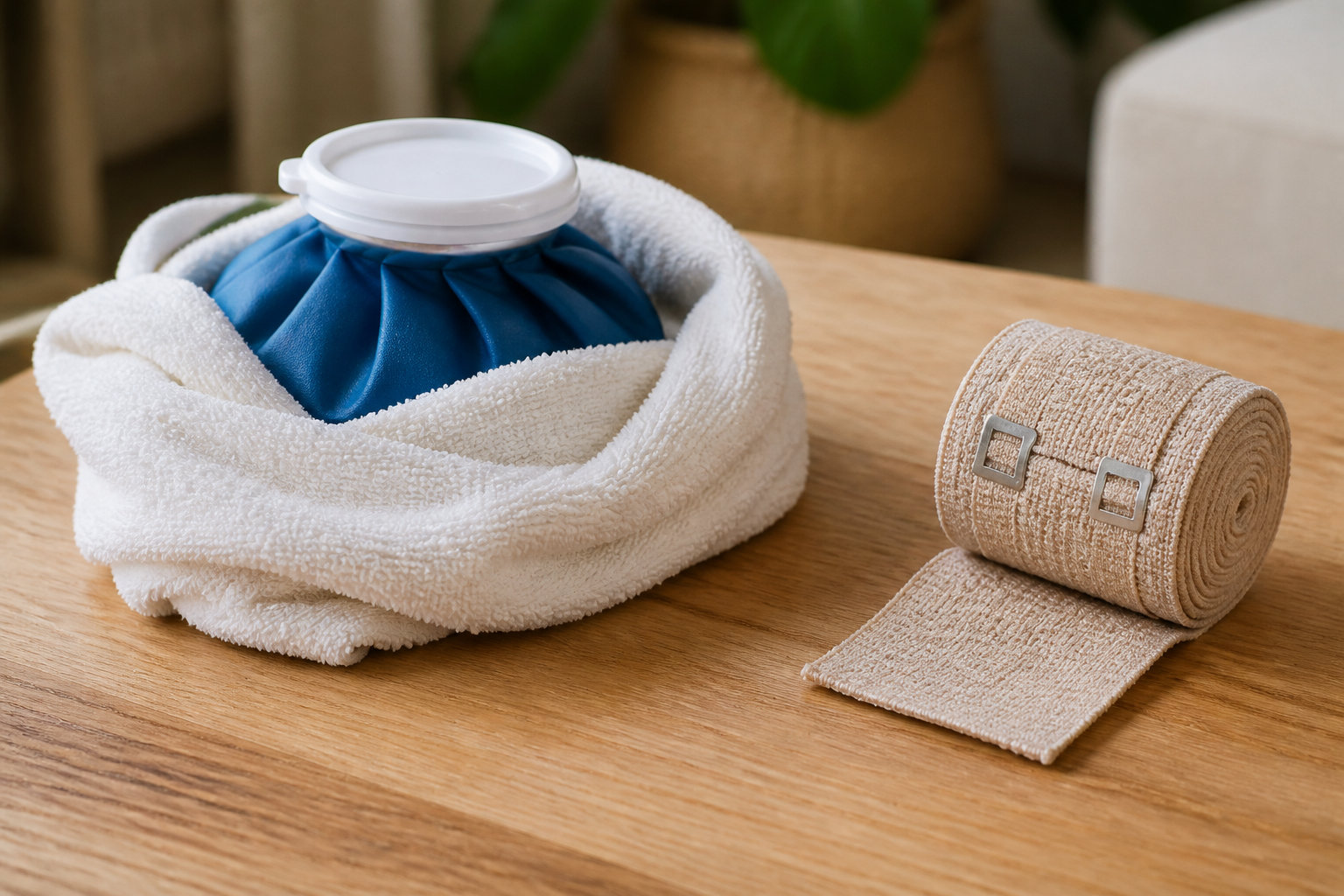
An ankle sprain heals well when the rehabilitation is structured. The old RICE protocol has been replaced by PEACE & LOAD: no ice, no excessive rest. The goal is to guide the ligament through each phase of healing and restore stability durably before returning to sport.
The lateral ankle sprain is the most common sports injury. And yet a significant number of people return to activity too early, without completing rehabilitation. The result: chronic instability, repeated sprains and longer-term consequences on the knee and hip.
Contents
Grades and structures involved
The lateral ligament complex includes three bundles: ATFL (anterior talofibular), CFL (calcaneofibular) and PTFL (posterior talofibular). 90% of sprains affect the ATFL, which is the weakest of the three and the first to rupture in inversion.
| Grade | Injury | Return timeline |
|---|---|---|
| Grade 1 | Micro-tearing, no laxity | 1 to 2 weeks |
| Grade 2 | Partial rupture, moderate laxity | 4 to 6 weeks |
| Grade 3 | Complete rupture, significant laxity | 3 to 4 months |
The clinical examination distinguishes grades through the anterior drawer test and the talar tilt test. Imaging (X-ray, ultrasound, MRI) is only needed when a fracture is suspected or to confirm a complete rupture.
PEACE & LOAD protocol
RICE, the old standard, is obsolete. Ice slows the inflammatory response that is necessary for tissue healing. The current consensus replaces it with PEACE & LOAD.
Protect · Elevate · Avoid anti-inflammatory modalities · Compress · Educate — then Load · Optimism · Vascularisation · Exercise
Acute phase: PEACE (first 72 hours)
Protect the ankle: limit weight-bearing for 1 to 3 days to allow initial repair. Elevate the limb above heart level to reduce swelling. No ice, no anti-inflammatories: the inflammatory response is the first phase of healing. Interrupting it delays ligament repair. Compress with a bandage to limit swelling. Educate the patient: avoid passive treatment, understand the process.

Subacute phase: LOAD (from day 3)
As soon as pain allows, progressive loading begins. Tendons and ligaments remodel under mechanical stress. Without load, the scar tissue remains disorganised and weak. Start with full weight-bearing walks, then move to more challenging activities as each stage is tolerated.
No ice on a sprain. The inflammation that seems problematic is what builds the repair.
Strengthening and proprioception
Reducing swelling is only the first step. The ligament has healed but the joint remains vulnerable without muscular and proprioceptive work.
Fibular strengthening
The fibular muscles (peroneus longus and brevis) are the dynamic stabilisers of the lateral ankle. Resistance band work, standing heel raises and unilateral strengthening exercises rebuild the active protection that the ligament alone cannot provide.
- Resistance band eversion (weeks 1 to 3)
- Bilateral heel raises then unilateral (week 2 onwards)
- Lateral step-ups on the affected side (week 3 onwards)
- Heel raises on inclined surface (month 2)
Proprioception and balance
The sprain damages the mechanoreceptors in the ligament. These small sensors inform the brain about ankle position in space. Without specific rehabilitation, the neuromuscular reflex does not recover on its own, even when the ligament has healed structurally.
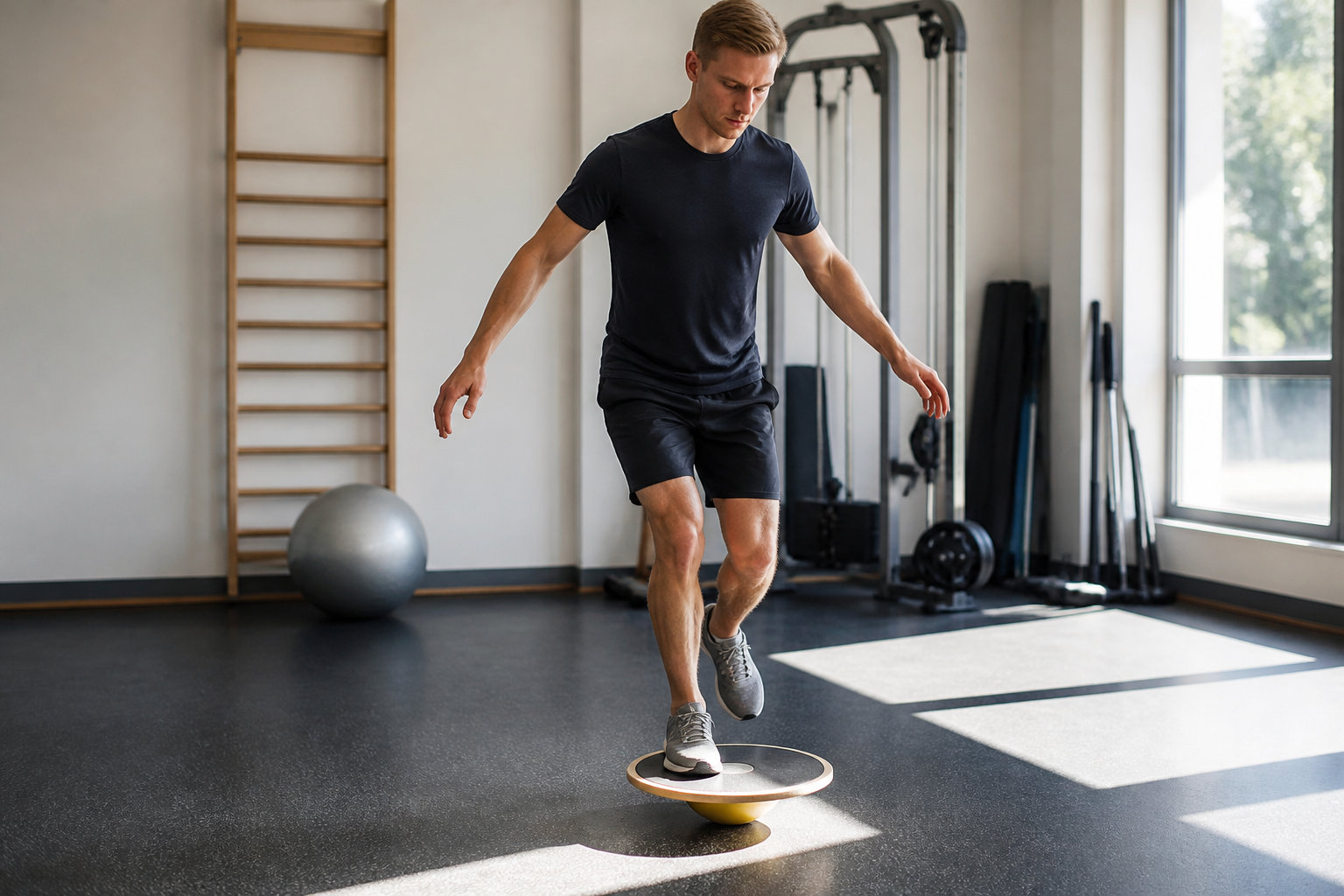
The proprioception programme progresses in three stages: stable surface (flat ground, eyes open), then unstable surface (balance board, foam), then dynamic tasks (jumps, direction changes at speed). Each stage must be validated before moving to the next.
Ankle assessment in Geneva
No referral needed. Complete assessment and objective rehabilitation programme.
Return-to-sport criteria
Too many athletes return to the pitch based on subjective feel alone. An objective protocol reduces re-injury risk significantly.
Objective functional tests
Three consecutive single-leg hops for distance. Target: 90% symmetry between injured and uninjured side. This reflects the ability to absorb dynamic loads.
10 cm minimum between big toe and wall on a lunge. This measures ankle dorsiflexion range of motion, which directly influences shock absorption and change-of-direction mechanics.

External support for transition
A semi-rigid orthosis significantly reduces the risk of re-sprain during the return-to-sport transition phase. It does not replace proprioceptive work but provides a safety margin while the neuromuscular reflex is still consolidating.

- No pain at full load
- Triple Hop Test ≥ 90% symmetry
- Toe-to-wall test ≥ 10 cm
- No swelling after a training session
- Full range of motion compared to uninjured side
Frequently asked questions
Grade 1 sprains typically resolve in 1 to 2 weeks. Grade 2 requires 4 to 6 weeks of structured rehabilitation. Grade 3, with complete ligament rupture, may take 3 to 4 months before full return to sport.
These timelines assume objective criteria are met progressively, not just that pain has subsided.
Return to sport requires meeting objective criteria: the Triple Hop Test at 90% symmetry, a toe-to-wall test at 10 cm and absence of pain at full load. Returning too early without these multiplies recurrence risk.
Surgery is rarely indicated. The vast majority of sprains, including grade 3, heal with well-structured conservative rehabilitation. Surgery may be considered after recurrent instability episodes that fail conservative treatment.
Yes. A semi-rigid brace helps manage the transition to more demanding activities and limits re-sprain risk during early return to sport. It does not replace proprioceptive work but complements it.
Ideally within 48 to 72 hours of the injury. Early physiotherapy significantly reduces chronic instability risk and allows you to follow a progressive, objective protocol from the start.