IT Band Syndrome in Runners in Geneva: Treatment and Return to Running
IT band syndrome affects 12% of runners. The lateral knee burning comes from friction of the iliotibial band against the lateral femoral condyle at 30° of knee flexion. Treatment is built on gluteus medius strengthening and a very progressive return, capped at 10% weekly volume increase. A cadence around 180 steps per minute reduces impact and protects the band.
Contents
The Friction Mechanism
The iliotibial band is a fibrous structure running from the hip to the tibia along the outer thigh. At approximately 30 degrees of knee flexion, it rubs against the lateral femoral condyle. Repeated thousands of times per session, this movement irritates the underlying tissues.
A richly innervated fat pad sits beneath the band. It transmits the pain. The characteristic lateral burning comes from repeated compression of this zone, not from a structural tear.
Friction peaks at approximately 30° of knee flexion, the angle the runner crosses with every stride. The longer the stride and the longer the ground contact, the more times the band passes through this critical zone per session.
A burn that forces you to stop
Pain sits precisely on the outer knee at condyle level. It builds progressively during a run after a distance that often stays the same from session to session. Continuing the effort intensifies it until a complete stop is unavoidable.
IT band pain is a precise mechanical alarm: it does not resolve with continued effort but intensifies until a full stop.
Downhill running aggravates the friction because the knee spends more time at the friction angle. Descending stairs can become painful. Both signs together point strongly toward this diagnosis.
Triggering Factors
Overtraining and footwear
Too-rapid weekly mileage increase is the most frequent cause. Connective tissue adapts more slowly than the cardiovascular system and muscles. A runner jumping from 30 to 50 km per week in a few days exceeds the band's adaptive capacity.
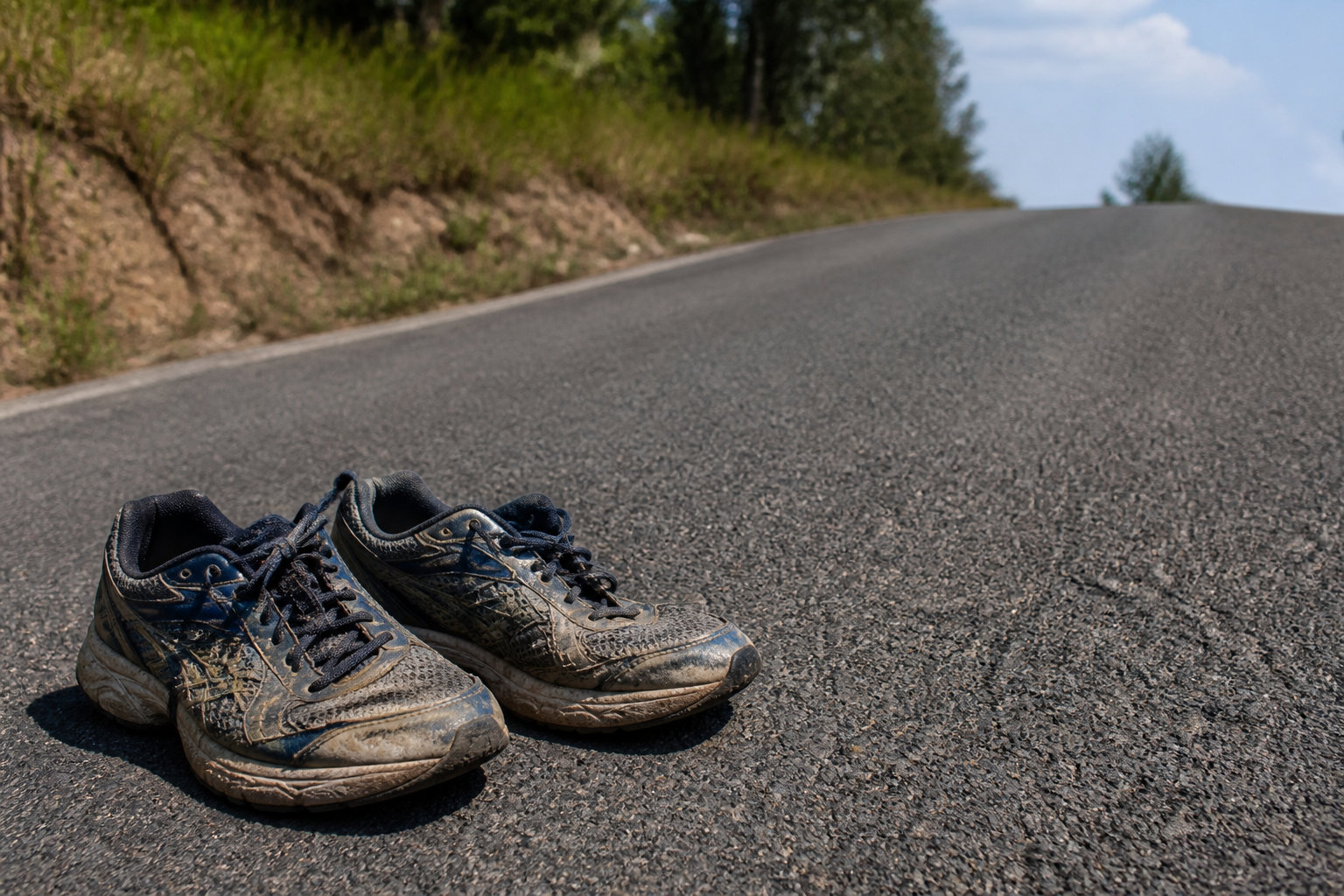
Worn shoes alter foot strike and redistribute mechanical loads. Running on the edge of a cambered road forces the knee into internal rotation and increases lateral compression with every footfall.
Morphology and muscle chain
A weak gluteus medius lets the pelvis drop at every single-leg stance. This movement forces the knee into valgus and compresses the band against the condyle. It is the biomechanical cause most commonly found in chronic sufferers.
- Pronated or supinated feet
- Gluteus medius weakness
- Pelvic drop during stance
- Genu varum (bow legs)
- Leg length discrepancy
Noble and Renne tests
The Noble test applies pressure on the lateral femoral condyle while the patient progressively straightens the leg. Pain reproduced at 30° of flexion confirms the diagnosis. The Renne test is performed in single-leg stance: the patient slowly flexes the knee under load, with lateral pain reappearing at 30°.
Lateral knee pain can also suggest a lateral meniscus tear or popliteus tendinopathy. Clinical examination distinguishes these presentations without imaging in most cases. Precise pain location and its reproducibility on testing guide the diagnosis.
Treating Lateral Knee Pain
Treatment follows two successive phases: calm the mechanical irritation, then rebuild the stability that will allow a recurrence-free return to running.
Acute phase: relative rest and anti-inflammatories
Stopping running is the first measure. Continuing on an irritated band worsens the inflammatory reaction and extends recovery time. Cycling and swimming maintain cardiovascular fitness without loading the friction point.
Oral anti-inflammatories can help in the first few days if pain is intense. A doctor will confirm the indication based on the clinical picture.
Gluteus medius strengthening
This is the core rehabilitation work. A strong gluteus medius prevents the pelvis from tilting at stance and keeps the knee tracking in line. Without this strengthening, all other measures simply delay recurrence.
Key exercises: clamshell (hip abduction in side-lying), lateral lunges and single-leg glute bridge. Proprioceptive work on unstable surfaces retrains the automatic stabilisation reflexes of the knee.
The banded clamshell (side-lying, knees bent, opening the top knee against elastic resistance) effectively isolates the gluteus medius. Three sets of 15 repetitions daily during rehabilitation.
Myofascial release and mobility
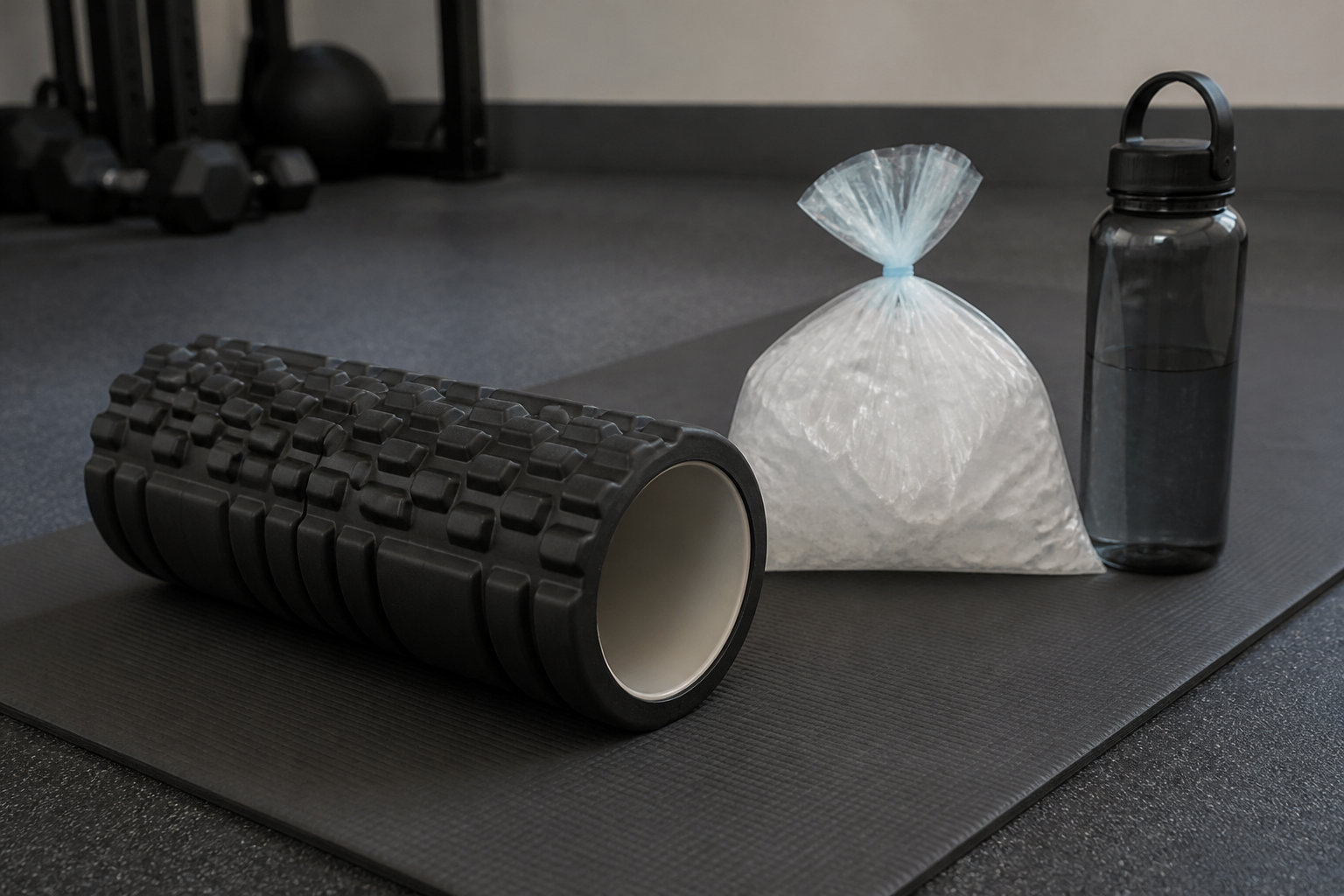
Foam rolling along the lateral thigh loosens the fascia lata and reduces the tension the band transmits to the condyle. The session is uncomfortable but significantly beneficial for morning stiffness and overall chain flexibility.
Stretching targets the entire lateral chain: TFL, gluteus maximus and the band itself. Orthotics can correct underlying static faults such as excessive pronation or genu varum and directly reduce mechanical tension on the band.
| Phase | Main action | Goal |
|---|---|---|
| Acute | Relative rest | Stop mechanical irritation |
| Strengthening | Gluteus medius exercises | Stabilise the pelvis |
| Mobility | Foam rolling | Release tension |
| Return | Walk-run alternation | Re-adapt the tissues |
Runner's knee assessment in Geneva
No referral needed. Precise diagnosis and strengthening programme adapted to your training level.
Durable Return Without Recurrence
Cadence and running mechanics
A cadence of 180 steps per minute shortens stride length and reduces ground contact time. Mechanically, the knee spends less time at the friction angle and receives less load per footfall. A metronome or GPS watch makes this straightforward to implement.
Landing the foot under the centre of gravity avoids the braking effect that heavily loads the lateral chain. Limiting vertical oscillation reduces impact at landing. Both adjustments can be learned in a few sessions with video feedback.
Progressive return-to-run plan
Pain during the session must stay below 3/10. Lateral stiffness the following morning indicates the load exceeded what the tissues can currently handle.
- Week 1: 1 min run / 1 min walk, 15 min total
- Week 2: 2 min run / 1 min walk
- Week 3: 5 min run / 1 min walk
- Week 4: Continuous 20 min run
The 10% rule applies to total weekly volume. Increasing too fast after a rest period is the main cause of recurrence. Gluteus medius strengthening continues in parallel throughout the entire return phase.
Consistency beats intensity: three pain-free ten-minute runs are worth more than one hour with inflammation.
Frequently Asked Questions
A sharp burning sensation on the outer knee that builds progressively during a run after a fairly consistent distance from session to session. It forces a complete stop. It worsens on downhill running and stairs, and does not resolve by continuing the effort.
Overtraining (too-rapid mileage increase), worn shoes and cambered roads are the most frequent extrinsic factors. Intrinsically: gluteus medius weakness, flat or high-arched feet and leg length discrepancy. These factors often accumulate before pain appears.
The Noble test: pressure on the lateral femoral condyle at 30° of knee flexion, positive if pain is reproduced. The Renne test: controlled single-leg flexion with pain reappearing at 30°. Both confirm the diagnosis without imaging in most cases.
Target 180 steps per minute to reduce load per footfall. Start with 1 minute of running alternated with 1 minute of walking for 15 minutes total. Increase volume by a maximum of 10% per week. Continue gluteus medius exercises throughout the return phase.
With early rest and a well-conducted strengthening programme, most runners return within 4 to 8 weeks. A delayed presentation after several weeks of running through pain can extend this to 3 months. Maintaining gluteus medius exercises as a prevention routine protects long-term.