Osteopath or physiotherapist: how to choose in Geneva?
For back pain, another pain, or an injury, the choice often comes up quickly: osteopath or physiotherapist? Both work with the body and with movement, and it is not always obvious whom to see.
This article helps you tell the two professions apart in Switzerland, understand reimbursement by LAMal, and recognise the situations where rehabilitation, or a medical opinion, should come first. It does not replace an examination.
Osteopath or physiotherapist: two distinct professions
In French-speaking Switzerland, the usual word is physiotherapist. In other French-speaking countries, especially France, a different word is used for the same profession. The training and the role are the same; only the name changes. The detail is on the page what difference there is between these terms in Switzerland.
An osteopath practises another profession. To know whom you are seeing, look at the title given: physiotherapist on one side, osteopath on the other. Some practitioners are trained in both. In that case, ask under which title they are seeing you for the session.
The title of physiotherapist is protected in Switzerland. It requires a recognised Bachelor-level qualification and a cantonal licence to practise. Physioswiss is the national professional association for physiotherapy. Osteopathy is also a distinct, regulated profession: the title is not something one simply adopts.
A simple landmark in the session
Ask yourself what is expected of you. If you are asked to move, repeat gestures and take exercises home, this is mainly active rehabilitation, typical of physiotherapy.
If the practitioner works mostly with their hands, without a programme for you to continue between sessions, the approach is closer to osteopathy. Both can use manual techniques: the distinction is therefore not always sharp, which is why it is worth asking.
What a physiotherapist does
The physiotherapist assesses your symptoms, your mobility, your strength and your activities. Together, you then look for a plan that fits: easing pain, recovering a movement, returning to work or sport, or supporting recovery after an operation.
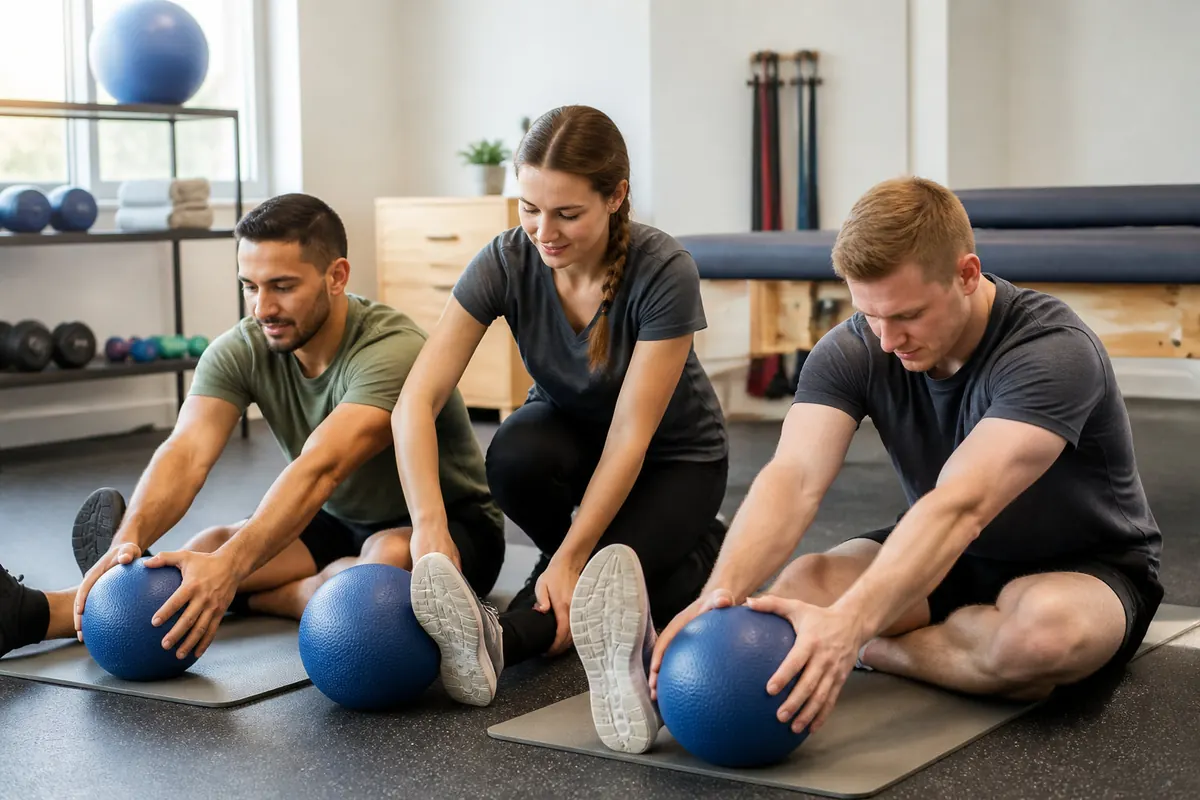
The core of the work is often active rehabilitation. You learn exercises and everyday movements, then you continue them between sessions. The practitioner may also use manual techniques, to ease a painful area or gain a little comfort, as a complement to the work you do yourself.
Physiotherapy is used in particular for pain in the back, neck, shoulder or joints, for sports injuries, and for recovery after immobilisation or surgery. The number of sessions depends on how you progress: there is no single figure.
When osteopathy can help, and where it stops
An osteopath works mainly through mobilisations and manual techniques. For a recent discomfort, without warning signs, some people go straight to an osteopath. That can be enough for a passing tension. It is not always the case, and it is not a medical diagnosis.
Osteopathy does not replace a doctor when symptoms call for an examination, imaging, medication or an operation. It also does not replace structured rehabilitation after a sprain, a fracture, an operation or a loss of strength.
These signs come before the choice of practitioner
Whatever professional you are considering, seek a medical opinion first, or call 144 in an emergency, if you have any of these signs:
- loss of control of the bladder or bowels, or tingling in the perineum;
- weakening legs, or a recent difficulty walking;
- pain that worsens at rest or at night, fever, or unexplained weight loss;
- pain after a significant trauma, or a history of cancer.
After an injury or an operation, rehabilitation through movement
After an injury, a period of immobilisation or an operation, recovering weight-bearing, mobility and strength is most often done through progressive work. You do the movements, guided by the physiotherapist, who adapts the load to what you can tolerate.
Staying completely still, without advice, does not generally help a tendon, a muscle or a joint take up its role again. The pace itself depends on the injury, your health and your goals. For an ankle sprain, for example, the stages of return are described in the article on returning to sport after a sprain.
An osteopath can, in some cases, play a complementary role. That is generally not the only care after surgery or an injury that requires rebuilding strength and control of movement.
Back pain: staying active, rather than prolonged rest
For ordinary back pain, without warning signs, prolonged rest is not usually the first response. The aim is rather to stay as active as possible, to take up everyday movements again and to move progressively, within a range of acceptable discomfort.
The physiotherapist helps you choose exercises you can keep up, and to return to your activities without forcing. Manual techniques can ease symptoms for a moment. They do not replace this active work, especially if the pain lasts or keeps coming back.
If the back pain persists or returns, talk to your doctor. They can, if needed, prescribe physiotherapy. Broader landmarks are also on the page back pain in Geneva.
Prescription, LAMal and fees in Geneva
You can see a physiotherapist without a prescription. However, basic insurance (LAMal) only reimburses sessions prescribed by a doctor. Complementary insurance may contribute to unprescribed sessions, depending on your contract. In the case of an accident, cover may fall under accident insurance (LAA).
Osteopathy is not, as a rule, reimbursed by LAMal. Complementary insurance may contribute. Amounts and ceilings vary widely from one contract to another: ask your insurer to confirm.
| Criterion | Physiotherapy | Osteopathy |
|---|---|---|
| Usual approach | Active rehabilitation, exercises, possibly manual techniques | Mostly manual techniques |
| Access | With or without a prescription | Usually without a prescription |
| LAMal (basic insurance) | Yes, if the session is prescribed by a doctor, at the official tariff | As a rule, no |
| Complementary insurance | Depending on the contract, especially without a prescription | Depending on the contract |
At the practice, sessions last 30 minutes. Without LAMal cover, the fee is CHF 60 (self-pay) or CHF 100 if you have private or international insurance, plus a one-off CHF 25 fee at the first session. With a LAMal, LAA or AI prescription, the official tariff applies. Home visits, outside LAMal, are billed CHF 130 for 30 minutes, travel included; with a prescription that states “at home”, the official tariff applies, as set out on the page physiotherapy at home. The details are also on the pages session fees and insurance reimbursement.
Before you book
These questions help you choose the right person to see. They do not make a diagnosis.
- Has your pain lasted several weeks, or does it keep coming back? A medical opinion, then prescribed physiotherapy, is often useful.
- Is this the aftermath of an injury, immobilisation or an operation? Guided rehabilitation is generally the priority.
- Do you want reimbursement by LAMal? You then need a prescription for physiotherapy.
- Do you have any of the warning signs above? See a doctor before any other appointment.
Seeing a physiotherapist in Geneva
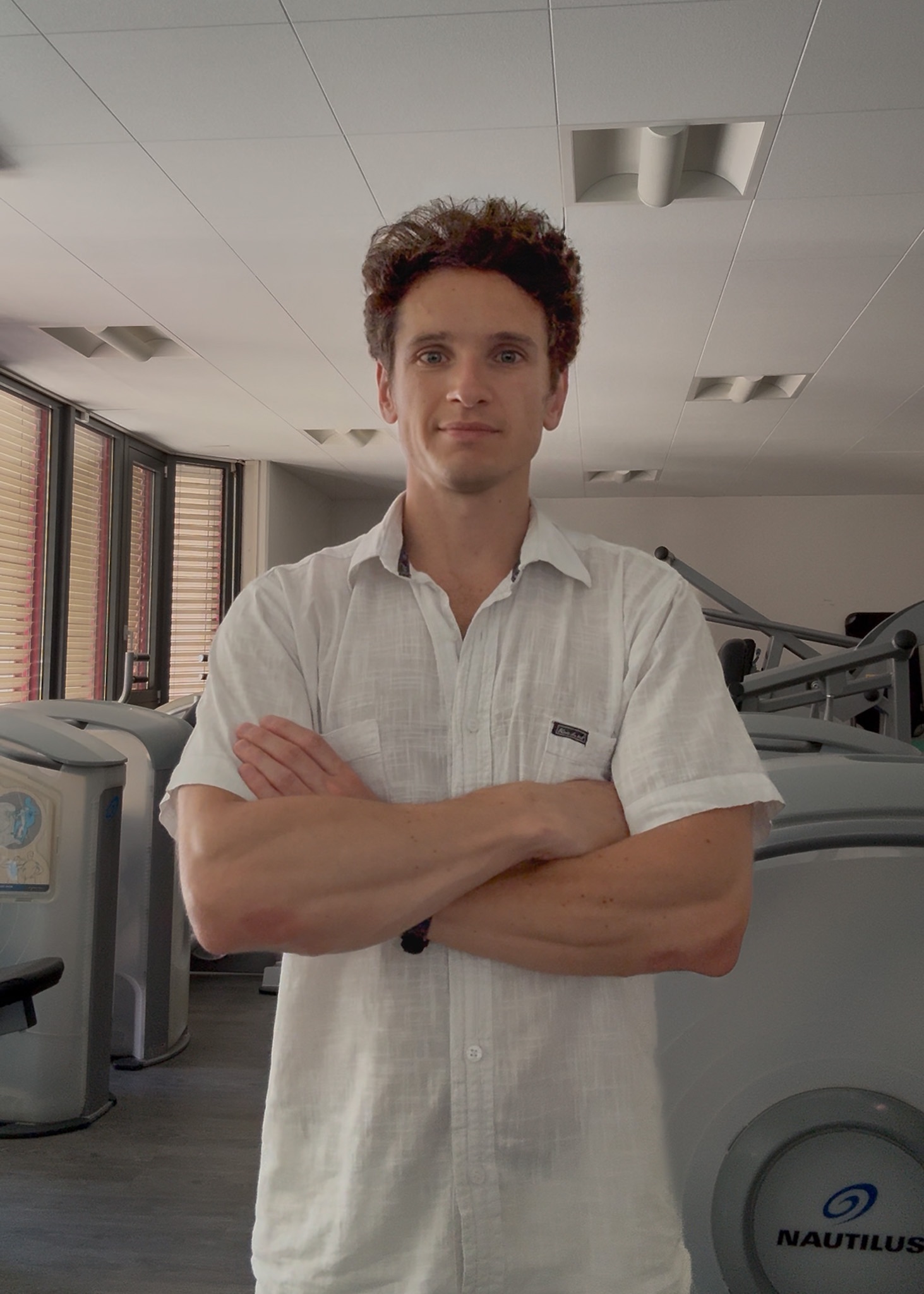
Samuel Monderer’s practice is at Rue du Vidollet 9bis, 1202 Geneva, within Strong Body Coaching, between Cornavin station and the Nations area. Consultations are in French, English and Italian.
Hours are Mondays from 7:30 to 12:30, Wednesdays from 14:00 to 20:30 and Saturdays from 9:00 to 16:00. You can book online via OneDoc, call 076 268 25 62, or write to contact@samuelmonderer.ch. The first session starts with an assessment.
Frequently asked questions
Do you need a prescription to see a physiotherapist in Geneva?
No. You can book without a prescription. Basic health insurance (LAMal) only reimburses sessions prescribed by a doctor. Without a prescription, you pay the practice’s private fee, unless complementary insurance contributes under your contract.
Is osteopathy reimbursed by LAMal?
As a rule, no. Basic insurance reimburses physiotherapy prescribed by a doctor, not osteopathy. Complementary insurance may contribute to osteopathy sessions, depending on your contract. Check with your insurer before booking.
How many physiotherapy sessions should you expect?
There is no fixed number. It depends on your situation and how you progress. With a LAMal prescription, the doctor usually prescribes a series of sessions, often nine, which can be renewed if needed. Your physiotherapist reviews this with you as you go.
Can you see both an osteopath and a physiotherapist?
Yes. The two approaches can follow each other or complement one another, depending on your case and your doctor’s advice. If a practitioner is qualified in both, ask under which title they are seeing you and what will be billed, because reimbursement is not the same.
Which signs mean you should see a doctor first?
See a doctor promptly, or call 144 in an emergency, if you lose control of your bladder or bowels, if your legs become weak, if you have a fever or unexplained weight loss, or if pain gets worse at rest or at night, especially after a trauma.
This article offers general information. It does not replace an examination by a doctor or a physiotherapist.
Book an appointment at the practice
Rue du Vidollet 9bis, 1202 Geneva, within Strong Body Coaching. Consultations in French, English and Italian.
Monday 7:30–12:30 · Wednesday 14:00–20:30 · Saturday 9:00–16:00.
Or call 076 268 25 62
or write to contact@samuelmonderer.ch