When can you return to sport after an ankle sprain?
- The time frame depends on the grade, but it is the state of your ankle that decides when you can return.
- An ankle that looks normal is not necessarily strong yet: the ligament remains fragile.
- Return in stages, without competition at first, to limit the risk of another sprain.
- If pain or swelling returns, go back to the previous stage.
- Seek care promptly if you cannot walk: a fracture can look like a sprain.
Contents
The ankle often looks healed well before the ligament is ready. The risk is then to return to sport too soon and sprain it again. This article explains how to tell whether your ankle is ready and how to return in stages.
Why does the ligament take so long to heal?
A sprain is a stretched or torn ligament. The grade describes how severe it is. In a grade I sprain, the ligament is only stretched, or a few fibres are torn. In a grade II sprain, part of the ligament is torn. In a grade III sprain, it is almost completely ruptured.
-
A first landmark before any return to sport.
-
Pain on effort suggests the ligament is not ready yet.
-
Check this together with the other two landmarks.
-
Swelling during the movement is a sign that the ankle has not fully recovered.
-
The Foot Lift Test compares both legs. A lasting difference should make you more cautious.
-
Jumping is introduced last, once the ankle is stable.
-
This helps rule out a fracture before you put more load through the ankle.
The more severe the injury, the longer healing takes. A torn ligament typically goes through three phases. Inflammation lasts 24 to 72 hours. Repair usually begins around day 3 to 5, and remodelling around week 2 to 4.
The ankle often looks normal well before the ligament is ready. At around three weeks, it may have recovered about 60 % of its strength. Towards three months, it often approaches the strength it had before the injury.
Balance can also remain incomplete, because the ankle senses its position less clearly. Keep balance exercises going for several weeks after you start walking normally again.
What time frames should you expect, according to severity?
These are indicative time frames by grade. They do not fix the date of return, which depends mainly on how the ankle feels and on specific tests:
- Grade I: 1 to 3 weeks.
- Grade II: 4 to 6 weeks.
- Grade III: 6 to 12 weeks.
- After a grade III sprain, a rigid brace should not be worn for more than 10 days.
Three stages can be distinguished in the return:
Return to participation
You train with the group, without matches or competition. You practise the movements of the sport, without playing.
Return to practice
You resume the sport properly, including matches and competition. The ankle tolerates usual effort, even if your pre-injury level has not fully returned.
Return to performance
You regain the level you had before the sprain. This is the last stage, after the return to practice.
How can you tell that the ankle is ready?
To judge whether your ankle is ready, check these three landmarks:
- You can walk without pain and feel no pain during the sport you want to resume.
- You feel ready and willing to return to sport.
- Your Ankle-GO score is above 11. This score combines functional tests and questionnaires about your abilities.

- Do a figure-of-eight drill: the ankle should not swell during the movement.
- Do the Modified Star Excursion Balance Test, a balance test that compares both legs, and note the difference between them.
- Do the Foot Lift Test: stand on one leg, then the other, and compare.
- Bring the top of the foot towards the shin (dorsiflexion): the movement should have returned, without pain.
- Hop on the spot: the ankle should push off and land without pain or a feeling that it gives way.
- Do not resume jumping if the ankle hurts or feels unstable.
How should you return, step by step?
Start rehabilitation in the first week if possible, then progress in this order:
- Work first on ankle mobility in several directions. For exercises, see this ankle rehabilitation guide.
- Gradually resume walking and weight-bearing, adapting the load to your symptoms if the sprain is grade I or II.
- Add balance work, then movements that matter for your sport.
- Reintroduce running, jumping and landing last.
- Train without competition. Start with a light session. Move on when there is no more pain or swelling.
- Resume the sport at a moderate intensity. Move on if strength and balance are good, with no swelling after effort.
- Regain your previous level. If pain or swelling returns, go back to the previous stage. See a doctor if it persists.
How can you limit the risk of another sprain?
Returning too soon is the most common reason for another sprain. The ligament has not yet regained its strength, and the ankle gives way at the first poorly placed step.
Poor balance matters just as much, and it can be trained. Have your balance and mobility assessed, then work on them during rehabilitation. These exercises help reduce the risk of a new sprain, especially in the following 12 months.
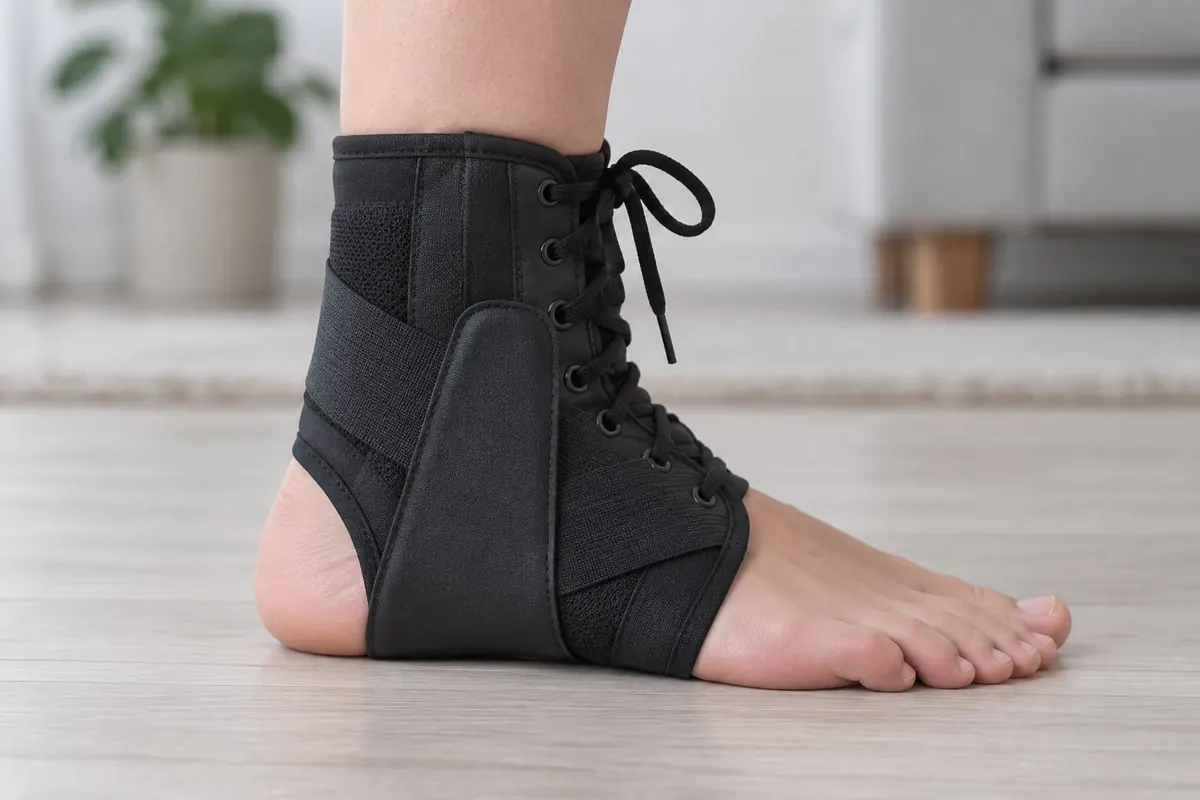
Do you hesitate to put your foot down on uneven ground? Keep the brace or tape.
Stopping protection as soon as the pain disappears, while you are still avoiding certain movements.
Wear a soft brace or tape during activity: this can reduce the risk of another sprain.
Jumping or changing direction without protection while the ankle still feels unstable.
When should you seek care?
After a twist with pain, swelling or difficulty moving, have the ankle examined within 24 hours. This helps establish what happened to the ligament before you put more load through it.
Seek care without delay if pain stops you continuing your activity, if the ankle swells within 24 hours, or if you still cannot take weight and walk.
The Ottawa rules flag cases that should be X-rayed: pain on pressing the back edge or the tip of a malleolus, or an inability to take four steps both immediately after the fall and at the examination.
If one of these signs is present, do not force the ankle to test it: without an X-ray, a fracture can remain unseen. If pain or weight-bearing has not improved after five to seven days, have the ankle reassessed.
Book an appointment in Geneva
Recent or recurrent sprain, or an ankle assessment before you return to sport: book an appointment.
Frequently asked questions
Yes, the body starts repairing it on its own. After the tear, it produces repair tissue and collagen that gradually fill the gap. This takes time: have the ankle assessed, then follow an adapted rehabilitation programme.
No food directly relieves a sprain. Rest and protection of the joint have a greater effect. A varied diet is enough. If you take medication or have a medical condition, ask a doctor or pharmacist for advice.
Time off work depends on how severe the sprain is and on the work you do: a standing job, or one that involves a lot of walking, generally needs more rest than a sitting job. Ask the doctor who is following you for a duration suited to your situation.
It depends on the severity: the ability to walk varies with the grade of the sprain. If the twist caused pain or swelling, have the ankle assessed first, then resume weight-bearing according to your symptoms and the advice of a health professional.