Groin pain in footballers: symptoms, assessment and return to play
On a football pitch, groin pain is not unusual. You often wonder where it comes from, how to ease it, and from when you will be able to play again.
This article explains what the word pubalgia covers, how it is assessed, and why progressive rehabilitation is generally more useful than a complete stop with no plan. It does not replace an examination.
What is athletic pubalgia in footballers?
“Pubalgia” refers to pain in the groin or pubic area. On its own, it is not a precise diagnosis. Under this word, several possible causes are grouped: the adductors (muscles on the inner thigh), the psoas, the pubic joint, the inguinal wall or, sometimes, the hip.
In footballers, it is a common discomfort, because the game chains together kicking, pivoting and running. Groin pain is therefore not surprising on a pitch. What still matters is understanding which structure is irritated, and whether there is a sign that calls for a prompt medical opinion.
Why it particularly affects footballers
Kicking the ball, pivoting on one leg or changing direction suddenly forces the pelvis and thigh to brake, turn and go again. These movements load the groin and trunk muscles with every action. Repeated, often on a harder surface, with little recovery time, they can irritate muscles, tendons or the pubic joint.
A previous episode of groin pain, a lack of adductor strength, or a return that is too rapid after a quiet period, are contexts often mentioned. They do not, on their own, explain every case. The link with training load alone is not always straightforward. It is the examination, more than a single factor, that guides what follows.
How it shows up
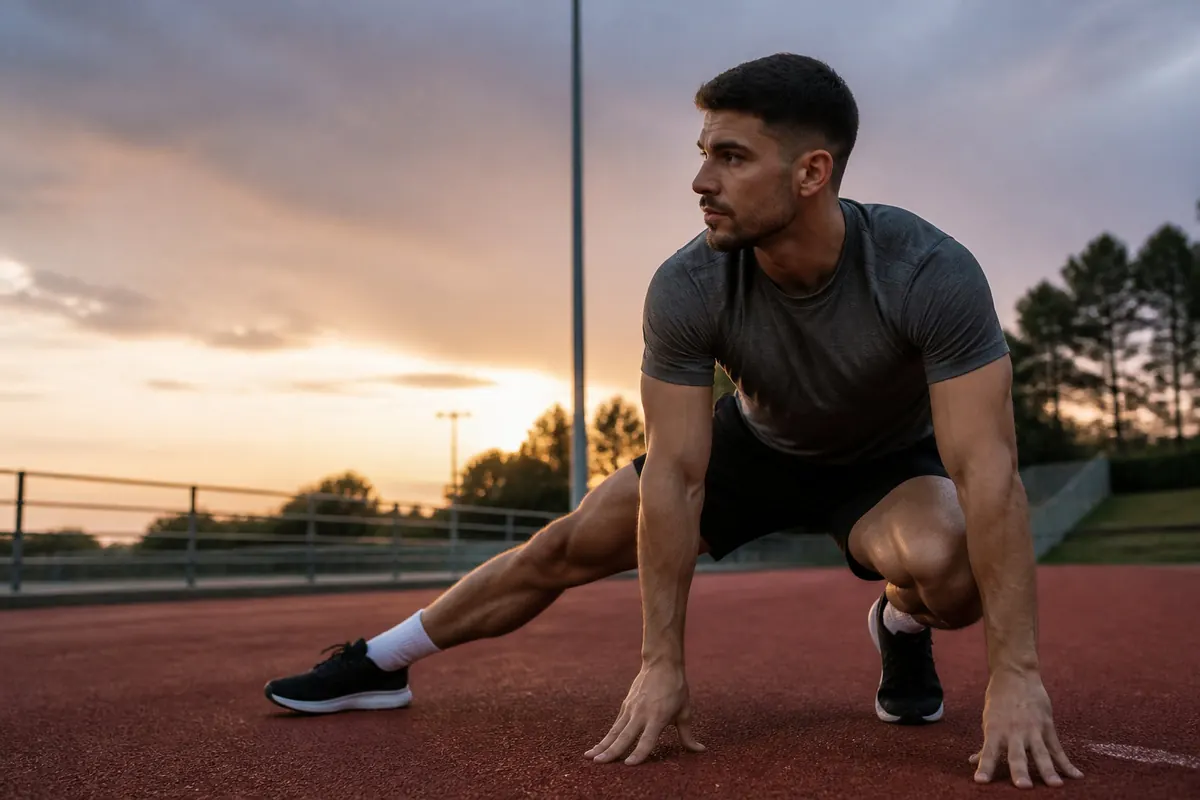
The pain is often felt high on the thigh, in the groin, in the lower abdomen or in the centre of the pubis. It typically comes back when running, changing direction, kicking the ball or putting weight on one leg.
It can remain intermittent, or settle in from one week to the next, even from one season to the next. Note what triggers it and what eases it: this information helps a great deal during the assessment.
Do not wait in these cases
Seek advice without delay, or emergency care if needed, if the pain appears at rest or at night, if you can no longer put weight on the leg, if there is a fever, marked swelling, or groin pain after a direct blow. These signs are not typical of a simple muscular overload.
How the diagnosis is made
The doctor, then the physiotherapist, first rely on your history and on the clinical examination: palpating the groin and pubis, testing the adductors, the psoas and the hip, looking at walking and a few kicking or loading movements, without forcing them.
Imaging is not routine. It is discussed if the picture is unclear, if it is not improving, or if another injury needs to be ruled out. In Switzerland, it is the doctor who prescribes it. A “pubalgia” written on a report does not remove the need to understand which structure is involved.
How athletic groin pain is managed
Active rehabilitation
For pain that persists, rest alone is usually not enough. Painful movements are reduced first (matches, repeated kicking, changes of direction), then progressive rehabilitation is resumed: strength of the adductors and trunk, control of the pelvis, then running, loading and football-specific movements.
Manual techniques can sometimes accompany the exercises. They do not replace them. A programme is built with you, according to what you can tolerate, and not according to a timetable identical for every player.
Returning in stages
A scheme often used is to move on to the next stage only if the pain stays tolerable during the exercises, then during running, changes of direction and finally kicking. The exact thresholds are set with the professional who is following you, not alone on a pitch.
Medication, other care and surgery
Painkillers or anti-inflammatory drugs, if they are considered, are discussed with your doctor or pharmacist. They do not replace rehabilitation. Other techniques, such as shockwave therapy, exist: they are not basic care and are discussed case by case.
Surgery only comes into play when a well-conducted rehabilitation is not enough, after a period that your doctor or surgeon assesses, and after a precise diagnosis (for example a weakness of the inguinal wall). It is not the first step.
How long before you can return
There is no single timeline. Return depends on the cause, how long the symptoms have been present, the quality of the rehabilitation and your level of play. Some players return in a few weeks, others need more time. Be wary of ready-made durations, taken from a single group of athletes.
Ask your doctor or physiotherapist for a staged plan, with concrete criteria (pain, strength, running, kicking), rather than a match date fixed in advance.
To prepare the consultation
Tick what applies to you. This list does not make a diagnosis.
- My pain is high on the thigh, in the groin, in the lower abdomen or at the pubis.
- It comes back when I run, change direction, kick the ball or put weight on one leg.
- I have had groin pain in the past, or the discomfort comes back from one season to the next.
- The pain appears at rest or at night, or I can no longer put weight on the leg.
| Stage | Practical landmark |
|---|---|
| Easing the overload | Reduce kicking, matches and painful loading |
| Strengthening | Adductors, trunk and pelvis, within acceptable pain |
| Resuming running | First in a straight line, then with changes of direction |
| Returning to kicking and play | Progressively, according to the criteria set in the session |
Seeing a physiotherapist in Geneva
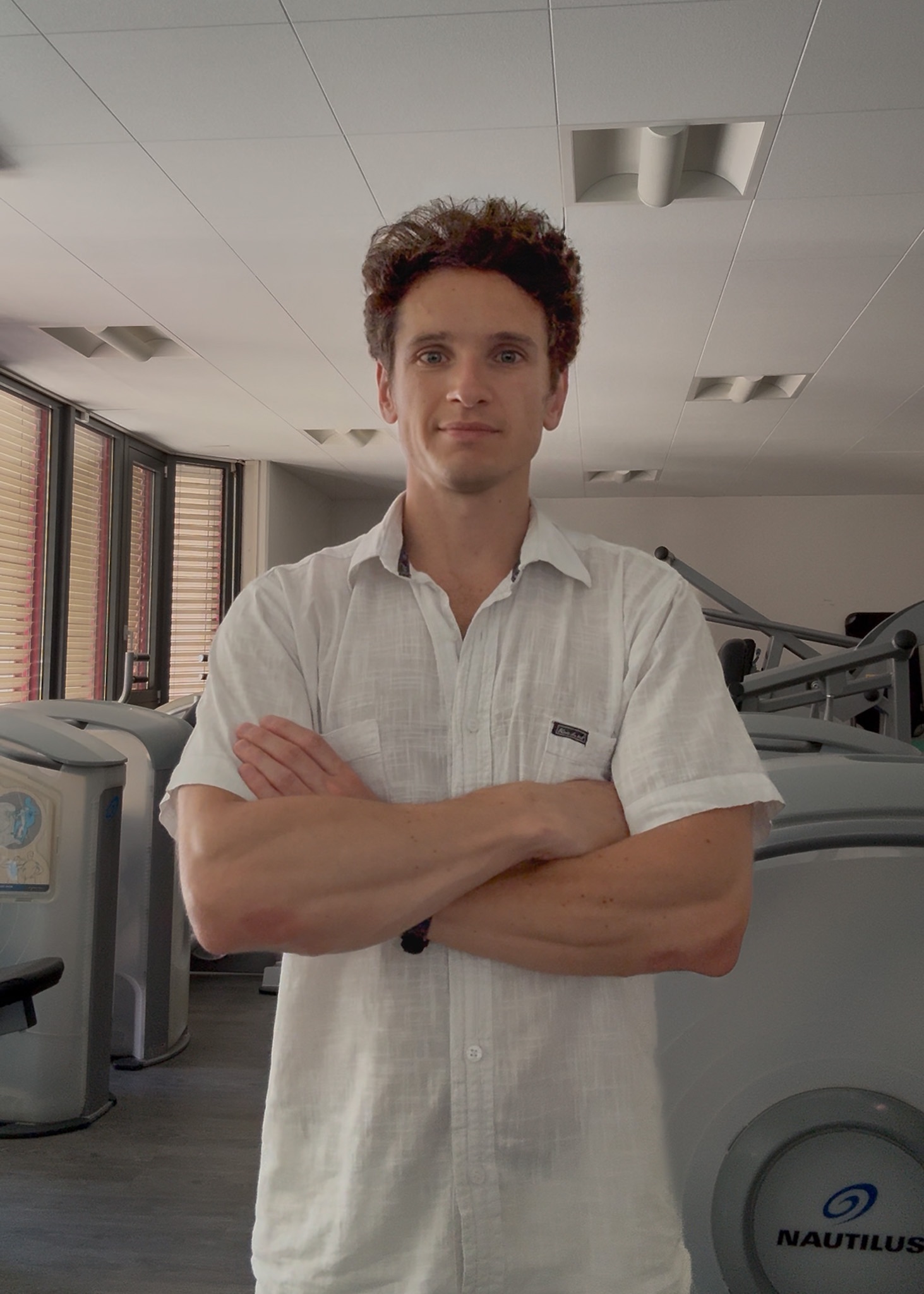
Samuel Monderer’s practice is at Rue du Vidollet 9bis, 1202 Geneva, within Strong Body Coaching, between Cornavin station and the Nations area. Consultations are in French, English and Italian.
Hours: Monday 7:30–12:30, Wednesday 14:00–20:30, Saturday 9:00–16:00. Appointments via OneDoc, on 076 268 25 62, or at contact@samuelmonderer.ch.
Sessions last 30 minutes. You can book without a prescription; for LAMal reimbursement, a medical prescription is required. See also the page on sports physiotherapy in Geneva. Other sport articles may be useful, for example on Achilles tendinopathy or iliotibial band syndrome, if your activity goes beyond football.
Frequently asked questions
What do people sometimes call “footballer’s groin”?
The phrase often refers to sport-related groin pain, grouped under the word pubalgia. It is not a precise diagnosis. Several structures can be involved. Only an examination can clarify the picture.
What is osteitis pubis?
It is a condition affecting the joint between the two pubic bones. It can be one cause of groin pain, among others (adductors, hip, inguinal wall). The term alone does not tell you which treatment to follow.
Can you keep walking with athletic groin pain?
Often yes, if walking only causes a tolerable discomfort and you have no warning signs. Movements that clearly increase the pain (kicking, changes of direction, single-leg loading) are reduced until you have been assessed. Seek advice if the pain appears at rest or at night, or if you can no longer put weight on the leg.
How can you ease groin pain and return to football?
Rest alone is usually not enough. Painful movements are reduced first, then a progressive rehabilitation programme, guided by a health professional, is used before running, loading and kicking are reintroduced. There is no single timeline, and no recipe that stops the pain overnight.
This article offers general information. It does not replace an examination by a doctor or a physiotherapist.
Book an appointment at the practice
Rue du Vidollet 9bis, 1202 Geneva, within Strong Body Coaching. Consultations in French, English and Italian.
Monday 7:30–12:30 · Wednesday 14:00–20:30 · Saturday 9:00–16:00.
Or call 076 268 25 62
or write to contact@samuelmonderer.ch