Ski Warm-Up: How to Prepare Your Body Before the First Run
- Allow at least 7 to 10 minutes of active warm-up before the first run.
- A warm-up does not prevent falls, but it reduces the risk of injury.
- Prepare your core, glutes and ankles too, not just your legs.
- Stop skiing as soon as fatigue makes you lose control of your turns.
- After an injury on the slopes, call 112 or the ski patrol.
Contents
The drive to the resort is spent sitting. Yet from the first run, legs and core must work hard. This article covers what to do before clipping in and what to do if something goes wrong on the slopes.
Why the body needs a warm-up before skiing
Sitting in the car or at the chalet, the body is at rest. Skiing demands physical effort from the very first descent.
Stand up and move before putting your boots on. Start with pain-free movements, then gradually increase their range so the muscles can prepare for the effort ahead.
A dynamic warm-up chains active movements that mobilise joints and muscles. Allow at least 7 to 10 minutes before the first run.
It does not eliminate risk. A fall can happen even after a good warm-up, on hard snow or at the end of the day. It lowers the chances of getting injured.
Which areas to target first
When skiing, most people think about their legs. The whole body maintains balance, though: upper body, lower body and the core connecting them.
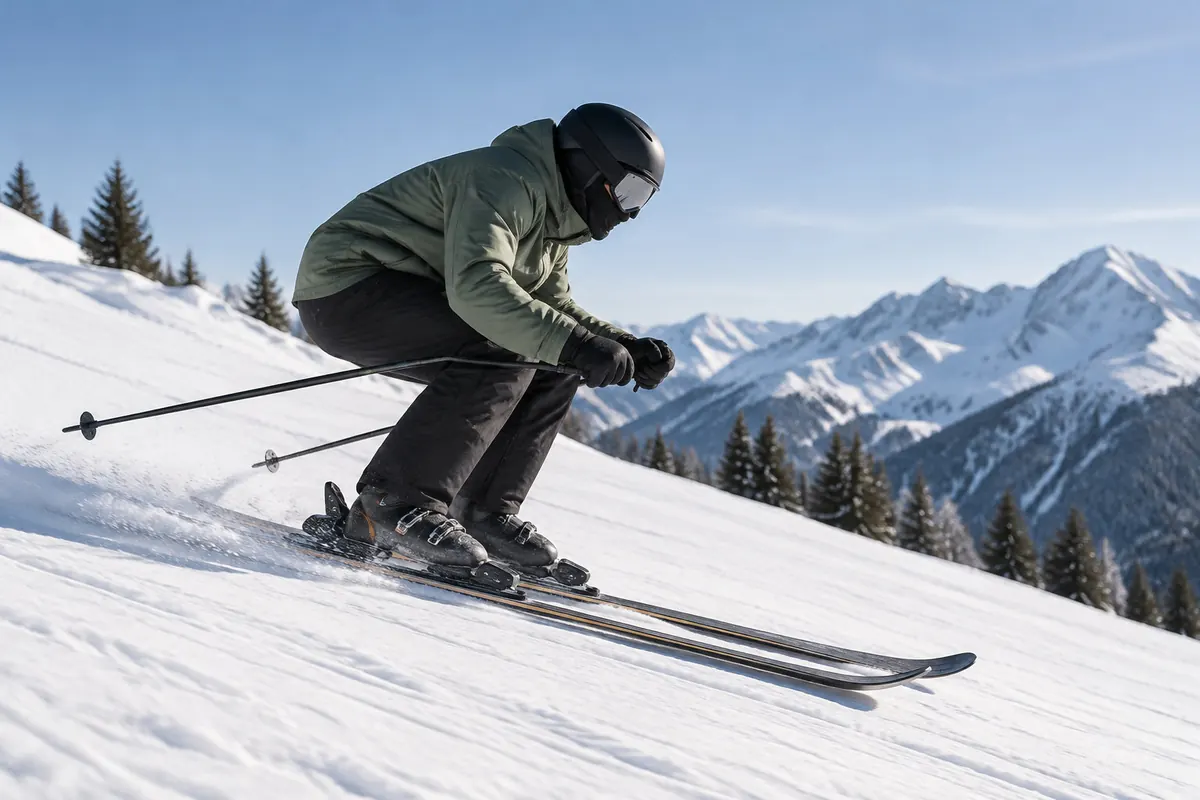
Injuries also affect the shoulder and head, right after the knee. Working only the legs is not enough.
Each zone plays a specific role:
- The core keeps you balanced.
- The glutes stabilise the pelvis, especially when you press on a single leg.
- The quadriceps hold the bent skiing position.
- The hamstrings and glutes control the knee and absorb forces.
- The ankle muscles transfer your effort to the ski and control its edge angle.
What to do before clipping in, step by step
Getting the whole body moving
Take 5 to 10 minutes for the warm-up. Do it next to the car or in a sheltered spot, before putting your boots on. Skis stay on the ground: you move freely before being locked in.
If time is short, keep at least 5 minutes. That is the minimum to wake the body up before the first run.
- Squats and stand-ups. Bend your knees, then rise. Your thighs should feel warm.
- Leg swings. Forward, back, then side to side. Use the car for balance if needed.
- Neck, chest and hip rotations. Slow movements. Your back should not lock up.
- Arm circles. Shoulders loosen and breathing picks up slightly.
Squats, lunges and core work
Do them in this order:
- 20 bodyweight squats, then 10 reverse lunges per leg.
- 8 to 12 lateral lunges per side, then 2 sets of 10 side planks per side.
- 1 to 2 sets of 5 to 10 tuck jumps, if your knees handle them without pain.
- Sensitive joints? Replace the jumps with a squat hold or step-ups.
How to ease into the first runs
For the first runs, choose an easy slope suited to your level. Keep a speed that lets you control your line.
These runs are part of the warm-up. Ski gently at first, then increase intensity as you feel looser: when you feel supple and in control, move to a more demanding slope.
Move without pushing for 15 minutes. Your body warms up without a sudden spike in effort. Slowly rotate your neck, then your shoulders. Rotate your wrists and ankles, then make small easy circles with your knees.
Why the knee is the most vulnerable zone
The knee is the most injured area. During the 2024–2025 season, it accounted for 57% of injuries among people rescued on alpine ski slopes.
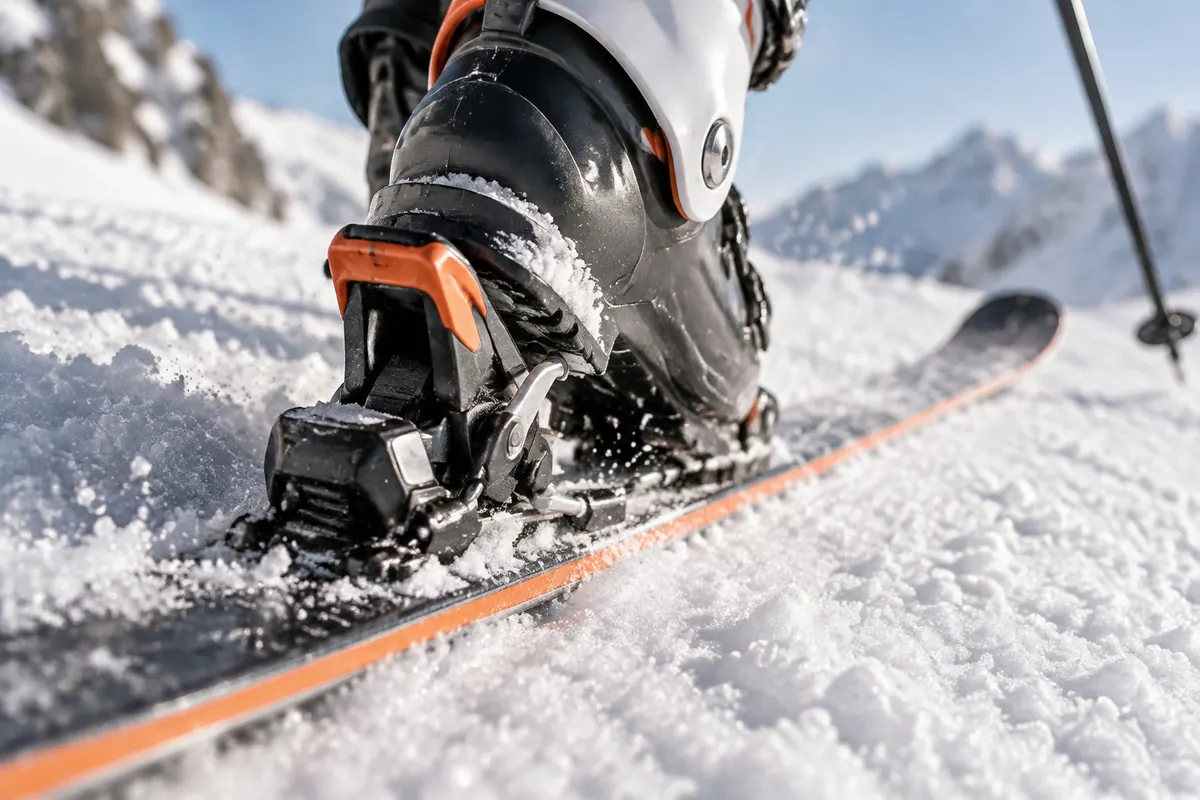
Knee sprains also account for more than 30% of skier injuries. The warm-up routine therefore starts with the legs.
Nearly one in four injuries in alpine skiing is an anterior cruciate ligament (ACL) rupture. The ACL holds the tibia when the knee rotates. Late in the day, the thighs fatigue and the knee absorbs twisting forces alone. As soon as tiredness is pushing you to call it a day, stop.
How to stay injury-free all season
Preparing the body before the trip
Start preparation one to two months before the trip. Walk at a brisk pace and, while walking, engage your abdominals and glutes. These muscles help keep the pelvis straight when the skis push through turns.
-
A dynamic warm-up prepares muscles and joints before the first effort.
-
The whole body maintains balance on skis.
-
These exercises use bodyweight only, no equipment needed.
-
The first runs are part of the warm-up.
-
Fatigue causes you to lose turn control, leaving the knee to absorb twisting forces alone.
-
Call 112 or the ski patrol — the number varies by resort.
Do a short floor session regularly. A mat is enough, no equipment needed. Chain core exercises, press-ups (knees on the floor if full press-ups are too hard) and single-leg balance work.
Strength and balance work
Keep these exercises going all season:
- Squats and lunges, for thighs and knees.
- Romanian deadlifts, for glutes and hamstrings.
- Planks, for the core that links upper body to skis.
- Single-leg balance: once you can hold still, turn your head or lean slightly forward.
- These proprioception exercises can reduce ankle sprains.
When to see a doctor after an injury on the slopes
After a fall, do not stay alone. If someone is injured, call 112 or the ski patrol — the number varies by resort.
Rescue services are charged: at Lac Blanc in 2025–2026, €180 within one kilometre of the rescue post, €300 beyond that and €560 off-piste.
See a doctor if any of the following signs appear. For rehabilitation, see the knee rehabilitation exercises:
- The knee swells quickly, feels unstable or you heard a crack.
- You have trouble walking or bending the knee.
- The thumb swells, becomes painful or feels unstable: stop skiing.
Book an appointment in Geneva
Post-fall injury or pre-season physical preparation: book a consultation.
Frequently Asked Questions
It reduces the risk without eliminating it. It prepares muscles and joints for effort, so the body handles the first runs better. For the rest of the day, ski within your ability and stop before exhaustion.
Yes. Squats and lunges use bodyweight only. You need a flat surface and enough space to extend your arms without hitting furniture.
Yes. For cross-country, move gently for the first 15 minutes without pushing for speed. Arms and legs work continuously, so the body needs to warm up before sustained effort.
5 to 10 minutes before clipping in, next to the car with skis on the ground. The first easy runs complete the warm-up.